Materials
Paper
For this module, there is an increased importance in the choice of material used for the final outcome. My choice of material would need to be an informed decision. As stated in my project proposal, I wished to use a material in which would be best adaptable for my skillset. As such, my first instinct was to look into flat material, and work on a 2d plane. Paper as a material seemed natural because of being able to use print as the connection between my work and my materials.
What is paper?
'Paper was invented by the Chinese by 105 AD during the Han Dynasty and spread slowly to the west via Samarkand and Baghdad. Papermaking and manufacturing in Europe started in the Iberian Peninsula, today's Portugal and Spain and Sicily in the 10th century by the Muslims living there at the time, and slowly spread to Italy and South France reaching Germany by 1400. In medieval Europe, the hitherto handcraft of papermaking was mechanized by the use of waterpower, the first water papermill in the Iberian Pensinsula having been built in the Portuguese city of Leiria in 1411, and other processes.[1][2] The rapid expansion of European paper production was truly enhanced by the invention of the printing press and the beginning of the Printing Revolution in the 15th century.[3]
The word "paper" is etymologically derived from papyros, Ancient Greek for the Cyperus papyrus plant. Papyrus is a thick, paper-like material produced from the pith of the Cyperus papyrus plant which was used in ancient Egypt and other Mediterranean cultures for writing long before the development of paper in China.[4] Papyrus however is a "lamination of natural plants, while paper is manufactured from fibres whose properties have been changed by maceration or disintegration.[5]' - Wikipedia entry on 'history of paper'
Paper is 'cellulose fibers' that is made into pulpwood. For recycled paper, the ink is removed from the material before it is remade back into pulpwood. There are many different results of pulping depending on whether the paper is recycled or not. The finish of the paper determines the application of the paper, and that is through it's coating (or lack of coating).
What is the importance of coating?
As the name suggests, coated paper has a coating, usually of china clay, which gives it a smooth finish. Coated papers are available in a gloss, silk (sometimes called satin) or matt finish and are used for projects requiring a fine finish, which is why coated paper is sometimes referred to as 'art' paper.
Uncoated paper doesn't have a coating and is therefore not as smooth as coated paper. You will use uncoated paper in your laser printer and photocopier. - information from http://www.tomtheprinter.co.uk/2007/01/choosing-paper-for-your-print-project.html
How is paper made?
The fibers that make up paper comes from wood. There are two different types of wood - 'hardwood' and softwood'.
Hardwood trees such as oaks and maples have wood with very short fibers. Paper made from these species is weaker than that made from softwoods, but its surface is smoother, and therefore better to write and print on.
Softwood trees such as pine and spruce have wood with long fibers, and paper made from this type of wood is much stronger. This paper is ideal for making products like shipping containers that require superior strength. But the finish is rougher, and that's not as good for writing, printing and many other uses.
Happily, we can blend fiber from hardwoods and softwoods into a single paper, getting just the combination of strength, whiteness, writing surface and other characteristics that we want. - information taken from http://www.tappi.org/paperu/all_about_paper/papermade.htm
There are many different types of paper designed for different applications; such as drawing and painting. In my particular case, the type of paper I researched was paper suitable for print. My work is entirely digital, with a few exceptions here or there. To understand more about my material, I needed to distinguish certain types of paper.
| Type | Description | End-USE |
|---|
| Cast coated paper | Provides the highest gloss surface of all coated papers and boards | Labels, covers, cartons and cards |
| Calendered or glossy paper | Paper that has gone through a glazing process – can be both coated and uncoated | Colour printing
|
| Machine finished paper | Paper which has been finished on the papermaking machine and is smooth on both sides | Booklets and brochures
|
Lightweight
coated | A thin, coated paper, which can be as light as 40 g/m2.
| Magazines, brochures and catalogues |
Matt finished paper
| The relative roughness of the paper surface prevents light from being reflected. Can be both coated and uncoated
| It is used in all kinds of high quality print work and is suitable for colour printing
|
Machine coated
| Paper that has the coating applied whilst it is still on the paper machine
| All types of coloured print
|
| Silk or silk matt finished papers | Like matt finished coated paper the surface is smooth but without reflections, which means that it combines high readability with high image quality | Product Booklets and Brochures |
Printing paper comes in different brightness levels measured from 1 to 100. The highest numbers, reflecting the most light, make reading difficult but are best for photo printing.
Papers come in different thicknesses, also known as its weight. Common printing paper has a weight of 20 lbs. while the heaviest cover stock has a weight up to 120 lbs.
Paper also comes in different levels of opacity, which simply means how much items printed on it will show through to the other side. Opacity is measured from 0, meaning transparent, to 100, meaning completely opaque.
information from http://www.ehow.com/facts_4947675_different-types-printing-paper.html
How paper is used
Paper can be produced with a wide variety of properties, depending on its intended use.[9]
- For representing value: paper money, bank note, cheque, security (see security paper), voucher and ticket
- For storing information: book, notebook, magazine, newspaper, art, zine, letter
- For personal use: diary, note to remind oneself, etc.; for temporary personal use: scratch paper
- For communication: between individuals and/or groups of people.
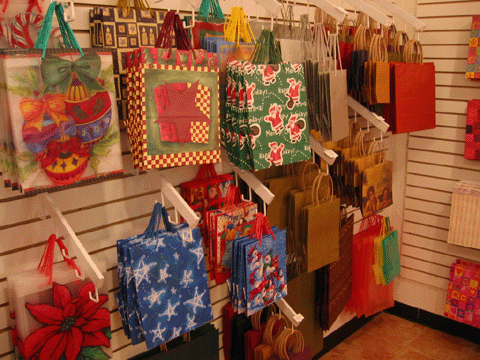
- For packaging: corrugated box, paper bag, envelope, wrapping tissue, Charta emporetica and wallpaper
- For cleaning: toilet paper, handkerchiefs, paper towels, facial tissue and cat litter
- For construction: papier-mâché, origami, paper planes, quilling, paper honeycomb, used as a core material in composite materials, paper engineering, construction paper and paper clothing
- For other uses: emery paper, sandpaper, blotting paper, litmus paper, universal indicator paper, paper chromatography, electrical insulation paper (see also dielectricpermittivity) and filter paper - information from http://en.wikipedia.org/wiki/Paper
How sustainable is paper?
Paper is, on a fundamental, sustainable; it is a renewable source.With careful deliberation, if trees are replanted after they are cut down, then they will be replaced. Of course, the rate of replenishment is dependent on the ratio of trees being cut to trees being grown; trees take a while to grow, meaning that it would take years for there to be an equal input into the environment. However, the rate of which paper is produced leads to it having impacts on the environment.

 As a printing substrate, paper offers a wide array of advantages: it is a sustainable material ideal for printing; it is light-weight, resistant and versatile; and it is constantly being developed with new applications in mind.
The sustainability of paper stems from its being a natural, renewable, recyclable product manufactured with clean, efficient and responsible technologies that contributes to improving the quality of life.
The life cycle of paper is integrated and sustainable. Trees produce wood by absorbing carbon dioxide, which remains stored inside paper. Recovery and recycling of used paper products extends the useful life of the cellulose fibres obtained from wood, thereby optimizing the advantages of this natural resource.
A counter-argument.
Paper products are the single biggest component of solid waste disposal sites, and as such represent a considerable environmental and social problem. Paper recycling can reduce the amount of paper to find its way to waste disposal. Recycling reduces the environmental and social costs of original paper production, but is not without its own costs such as increased use of fossil fuels in transporting the material for recycling, and costs in the reprocessing itself.
The environmental and social costs of tree-based paper production will force us to look more to other sources. It is sobering to think that two out of every five trees are cut for pulp. The current pulp paper production releases large amounts of dangerous pollutants, such as chlorine, dioxin and furans into the air and water. - Information from
http://www.lusabooks.com/
Overall, I would argue that the benefits of paper outweigh the negative impact.
Ink / Dye

For printing, there are two different types of ink used; pigment based and dye based. I have included this information for my research to highlight the importance of knowing what ink to use in order for the best result, that is cost-effective, for my product.
Pigment
- water fast on most paper media (dye based inks start to run when wetted if not printed on specially coated paper)
- fast drying (up to 100 times faster compared to dye based inks)
- non fading colors
- long life cycle
- low bleeding in the edges of the printed color
Dye
- high brilliance and contrast
- wide color gamut (i.e. the range of colors that can be produced)
- less expensive
Information from http://www.inkguides.com/printers-ink.asp
Can Ink be Sustainable?
Normal ink isn't very sustainable, due to the substances within it. However, the type of ink you use can be sustainable, or more sustainable than the cheaper more mass produced ink.
Inks traditionally contained petroleum. Environmentally friendly inks contain vegetable oil instead and reduce the levels of so-called Volatile Organic Compounds (VOCs) that have traditionally been a by-product of the printing process. Eco-friendly inks also lead to a large reduction in water usage for press washups that can be in the region of a 60% saving. Vegetable-based inks do not compromise quality; indeed, they have better drying characteristics than traditional inks. - Information from http://www.steffprint.co.uk/eco_friendly_printers.html#
Processes
I researched into the printing process to understand the basics of how it would come into fruition if my work was to be mass produced. There are different ways of printings. These processes are: Offset Lithography, Digital Printing, Letterpress, Electrostatic, and Thermography. The most used practice is Offset Lithography.
The most common printing method in the industry, most printers use offset lithography to save on ink and limit set up time. Hence, you are able to avail of a more affordable and cost effective print job for your color printing requirements. What printers usually do is to offset the ink (thus, the name) from metal plates to a rubber cylinder and then transfer it onto the paper stock.
It is probably the most popular printing method since its introduction. Digital printing is very effective since it reduces the time to complete the printing process. It doesn't need films and plates any more. What it does is to transfer the digital file directly to the printing press with the help of a computer. It’s relatively fast that customers often rely on digital printing to meet deadlines and schedules.
Created by Gutenberg, the Letterpress is considered as one of the first and original printing methods of all time. The letterpress gave birth to the concept of relief printing, where the image being printed is raised from the surface. However, the method is slowly going obsolete with the new and much faster methods being introduced in the market today.
Electrostatic Printing. Similar to photocopying, this method lets the color attach to a drum and is blended with the paper with the application of heat. It is similar to digital printing as it also provides cost effective production of short print runs.
This method produces raised image that you see mostly in stationeries. What the printer does is to use a special powder or dust that easily sticks to wet ink. Then they apply heat to blend the ink and the powder to form the raised image.
Printing is available to everybody, with specialized companies set up in taking orders that are not necessarily made in bulk. Anybody can have what they want printed, opening up the market and making things heavily competitive. On the upside, it is easier to have your 'foot in the door', especially if you are self-employed and wish to make industrial contacts without having to be part of a large company. On the downside, it means that you have to work harder in order to get your work recognized; skill and self-promotion is what sets apart those whom are successful and unsuccessful.
Here are some websites in which specialize in printing;
http://www.lulu.com/ - A web-based company that specialize in books. They offer services to print books as well as publishing services. They are one of the leading companies in this genre.
Printing in general, a small sample
http://www.stressfreeprint.co.uk/